Businesses are adopting AI, cloud and automation faster than they can secure them, creating new vulnerabilities every day.
“There is a clear gap between the speed at which new technologies are adopted and the ability of security teams to adapt their processes and strategies,” says Fausto Curado, Head of SIBS CyberWatch. “More than a technical challenge, it is a strategic and human one.”
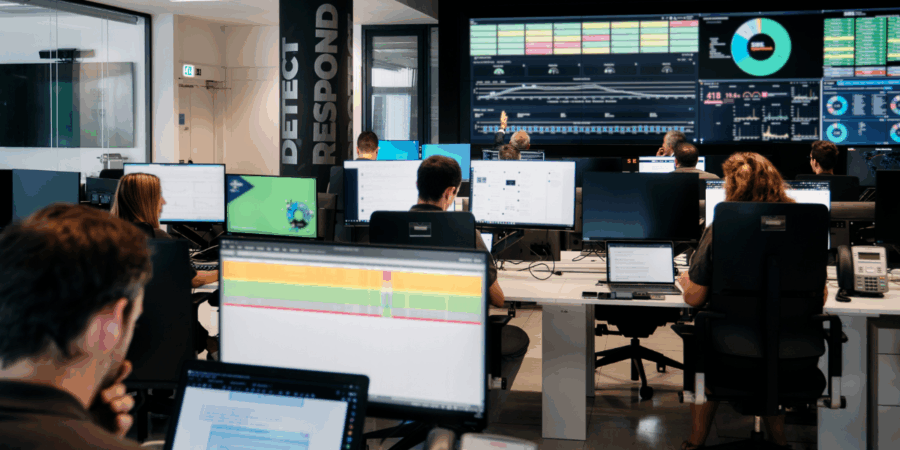
To help organisations address this reality, SIBS CyberWatch provides managed security services, including Security Operations Centre (SOC) services, threat monitoring, incident response support, penetration testing and security governance aligned with current regulations. This enables organisations to focus on their core business while strengthening cyber resilience.
Artificial intelligence illustrates both the risks and opportunities facing organisations. At SIBS CyberWatch, AI is used to provide context, prioritise alerts and anticipate threats before they become incidents. By filtering out unnecessary noise, security teams can focus on critical decisions while benefiting from continuous monitoring in an increasingly complex threat landscape.
“The adoption of these tools is inevitable, but it must be done intelligently,” says Curado. “AI does not replace specialists—it enhances their focus and responsiveness.”
People at the heart of digital defence
Technology alone cannot deliver resilience. At SIBS CyberWatch, equal emphasis is placed on developing people, recognising that skilled teams are essential to effective cybersecurity.
“Well-trained teams identify signs of an attack before damage occurs, just as radar detects a storm before it arrives,” explains Fausto Curado.
Continuous training and realistic simulations enable professionals to respond faster and more effectively while helping organisations translate technical cyber risks into meaningful business decisions. Combined with automation, this approach improves operational efficiency, shortens response times and strengthens organisations’ ability to detect and mitigate evolving threats.
Security that speaks the language of business
Cybersecurity is no longer solely an IT responsibility—it is a strategic business priority.
Using recognised frameworks including NIST, ISO 27001, NIS2 and DORA, SIBS CyberWatch helps organisations align security with regulatory compliance while supporting business objectives.
“No process or technology is sufficient without a well-established security culture,” says Curado.
“We transform technical data into strategic decisions, enabling security to become a business management asset.”
This approach links cyber risk to business impact, reducing alert fatigue, improving operational efficiency and embedding cybersecurity into corporate governance.
Its impact is already measurable. One financial institution reduced Mean Time to Detect (MTTD) and Mean Time to Respond (MTTR) by 60% after implementing a managed monitoring and incident response solution with SIBS CyberWatch. Another organisation reduced fraud by 85%, supported by more than 5,000 takedowns of phishing campaigns, fake profiles and fraudulent websites.
Security with industry DNA
Every industry faces different risks and regulatory requirements. SIBS CyberWatch delivers sector-specific cybersecurity services through highly specialised teams with experience across financial services, healthcare, pharmaceuticals and other highly regulated industries.
“In every sector, the risks, regulatory requirements and business impact are different,” says Fausto Curado.
CyberWatch’s multidisciplinary team includes SOC analysts (Levels 1–3), security engineers, Threat Intelligence specialists, malware analysts and incident response experts, enabling tailored services that anticipate threats while supporting regulatory compliance.
Core services include:
- 24×7 SOC with managed SIEM monitoring across critical infrastructure.
- Managed Detection and Response (MDR) for endpoints and servers.
- Cyber Threat Intelligence (CTI) with enriched alerts and sector-specific reporting.
- Penetration Testing to validate security controls.
- Governance, Risk and Compliance (GRC) services supporting security policies and regulatory requirements.
The future: faster innovation, stronger resilience
The future of cybersecurity depends on combining advanced technologies with integrated business strategies, including generative AI, Security by Design, Zero Trust architecture and digital supply chain monitoring.
“The organisations best prepared for the future will be those that understand cybersecurity as a living immune system—one capable of adapting and thriving even in uncertain environments,” concludes Fausto Curado, Head of SIBS CyberWatch.
By integrating technology, people, processes and a strong security culture, organisations can transform cybersecurity from a technical necessity into a strategic driver of resilience, competitiveness and sustainable growth.